
Opening Reflection
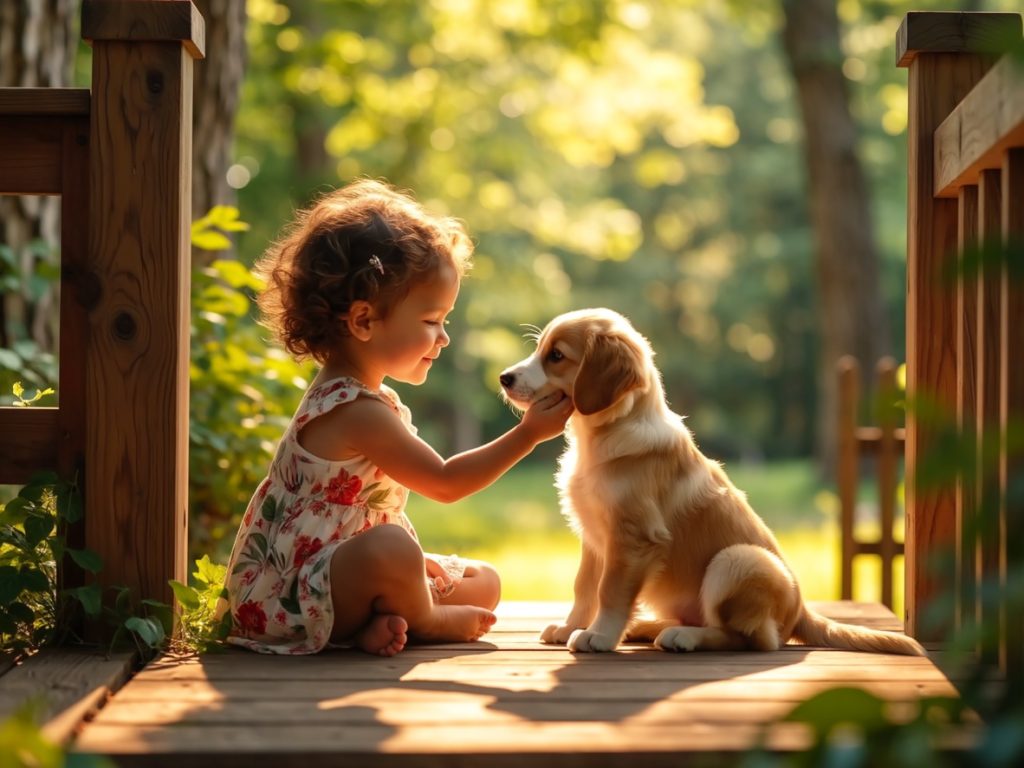
Most people like to believe their first pet loved them back. I have never been fully convinced. Cats seem to tolerate us as long as we keep the food bowl filled and the house warm, while dogs appear ready to worship the ground we walk on. Then you meet a cat that acts like a dog and suddenly your assumptions get shaken. Our current cat fits that description, and it made me think about something I had never fully considered. Maybe our first pet is more than a companion. Maybe they are the first creature outside our family that quietly teaches us who we are.
The Quiet Introduction to Responsibility
A first pet teaches responsibility before anyone hands you a chore list or sets expectations. Even a young child understands that if you forget the food or water, something suffers. There is no bargaining and no way to talk yourself out of it. You either show up or you do not. That becomes a small but powerful lesson about being accountable for another life. It happens quietly, without explanation, and it changes the way we see our own place in the world.
Learning to Read Without Words
Children learn to interpret nonverbal cues long before they can name them. A pet communicates through posture, movement, tone, and presence. A child pays attention because they have to. This early attention builds empathy and observation skills long before we ever talk about those ideas. A child begins to understand intention, mood, and need through simple, repeated interactions. Those same skills become the foundation for reading people later in life, even if we never acknowledge where it started.
Emotional Safety and Early Trust
A first pet becomes the earliest version of emotional companionship. Parents guide us. Siblings challenge us. But a pet offers something different. It offers presence without expectation. A child will tell secrets to a dog or sit quietly beside a cat because the moment feels safe. There is no judgment. No performance. Just acceptance. That kind of emotional safety is rare, even in adulthood, and a child experiences it long before they can articulate its value.
The First Lesson in Connection
These early moments shape how we approach relationships. We learn patience. We learn gentleness. We learn that connection does not always come from words. We learn that another being can depend on us and that we can depend on them in return. Before we ever navigate friendships, teachers, mentors, or co-workers, we have already practiced the fundamentals with a creature who asked very little but gave us something priceless in return.
What Stays With Us
When we look back, our first pet feels like a simple memory. But the truth is that they taught us how to care, how to listen, how to show up, and how to invest ourselves in something beyond our own needs. They taught us how to connect long before we knew what connection meant. A first pet is often the first teacher we did not realize we had.
What Shapes Us as Children and Who We Become — Series Overview
This three-part series explores the human relationships that quietly shape our emotional, social, and intellectual foundations. Our first pet teaches empathy and responsibility. Our childhood best friend introduces loyalty, imagination, and boundaries. And our teachers — especially around fourth grade — become the first adults outside our families who recognize our potential and guide us toward the person we’re becoming.
- Your First Pet: The First Teacher You Didn’t Realize You Had
- Your Childhood Best Friend: Where Loyalty, Laughter, and Boundaries Begin
- Your Fourth Grade Teacher: The First Adult Who Sees the Person You’re Becoming
If you would like to share your personal story, contribute insight for future articles, or connect with CAHDD™ for upcoming discussions on human development, we would be glad to hear from you.
Creator’s Mark: Russell L. Thomas
Overall classification: CAHDDⓧ — Stage X
This page combines written and visual components created at different CAHDD stages. The Creator’s Mark identifies who stands behind the work; the stages explain how it was made.
Written content: CAHDD③ — Stage 3. Human-authored and directed, with AI-assisted research, grammar, or editorial refinement. The author made all final decisions and accepts responsibility for the published text.
Images: CAHDD④ — Stage 4, unless individually captioned otherwise. Images were AI-generated under human art direction, selection, and approval.
Tools: Grammarly, ChatGPT, and PromeAI may have been used according to the roles described above.
Review: Reviewed by Russell L. Thomas for accuracy, tone, context, and final approval.
Method: Computer Aided Human Designed & Developed™ (CAHDD™).